George and Martha Washington go on Display at Mount Vernon, Part I
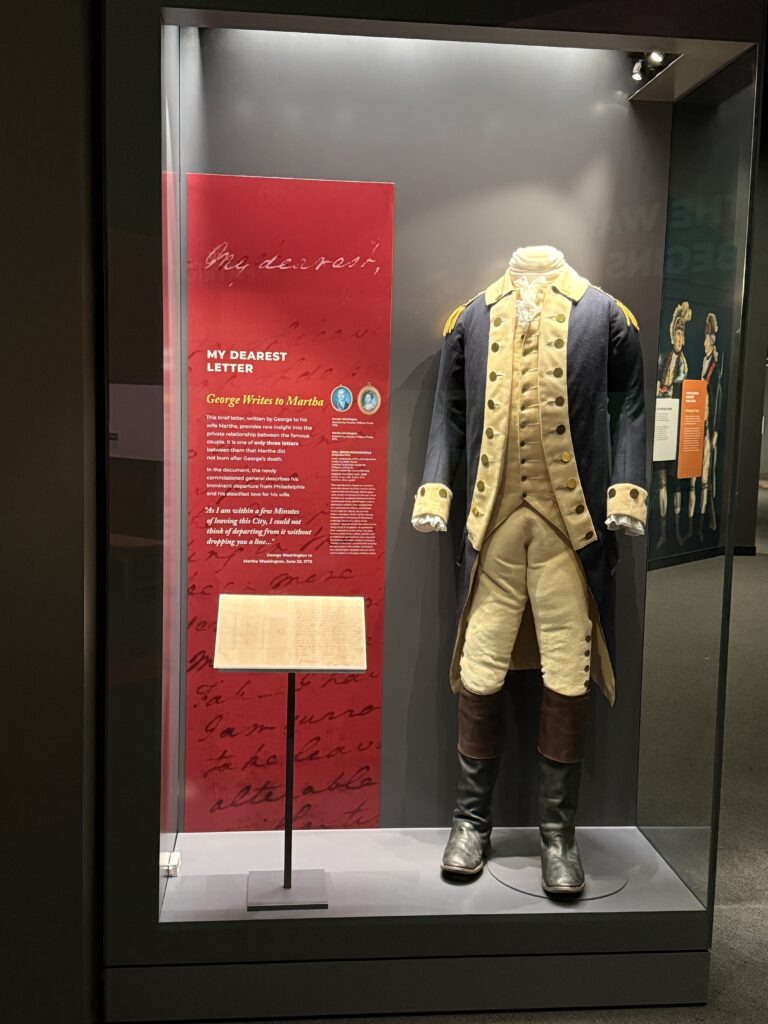
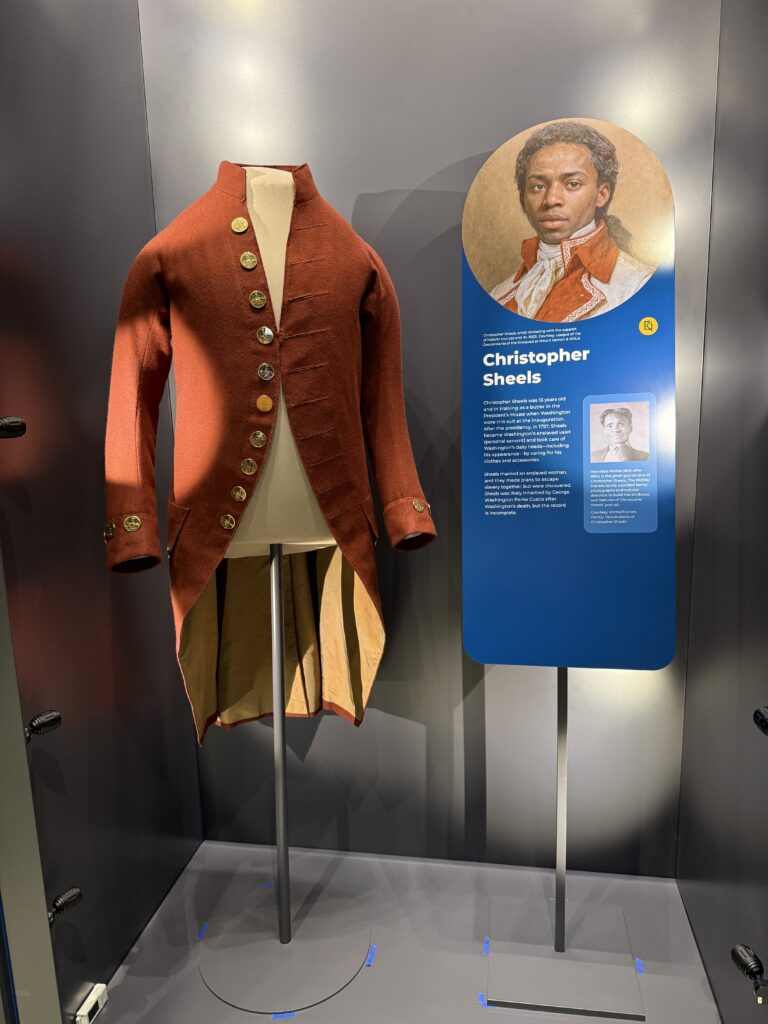
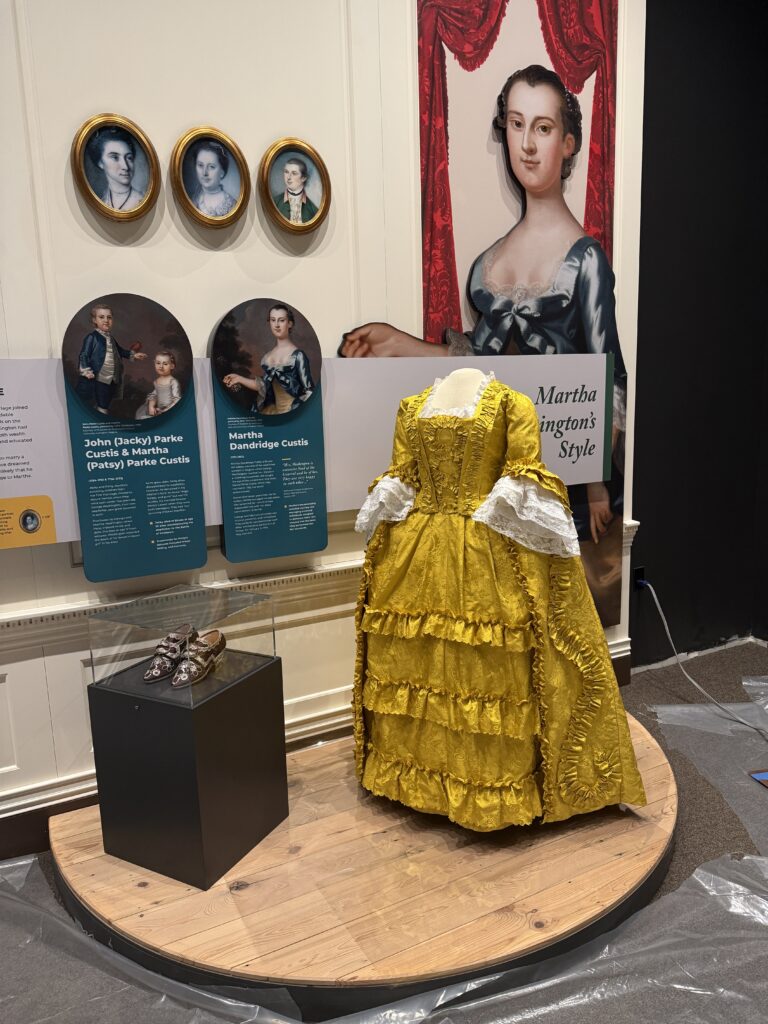
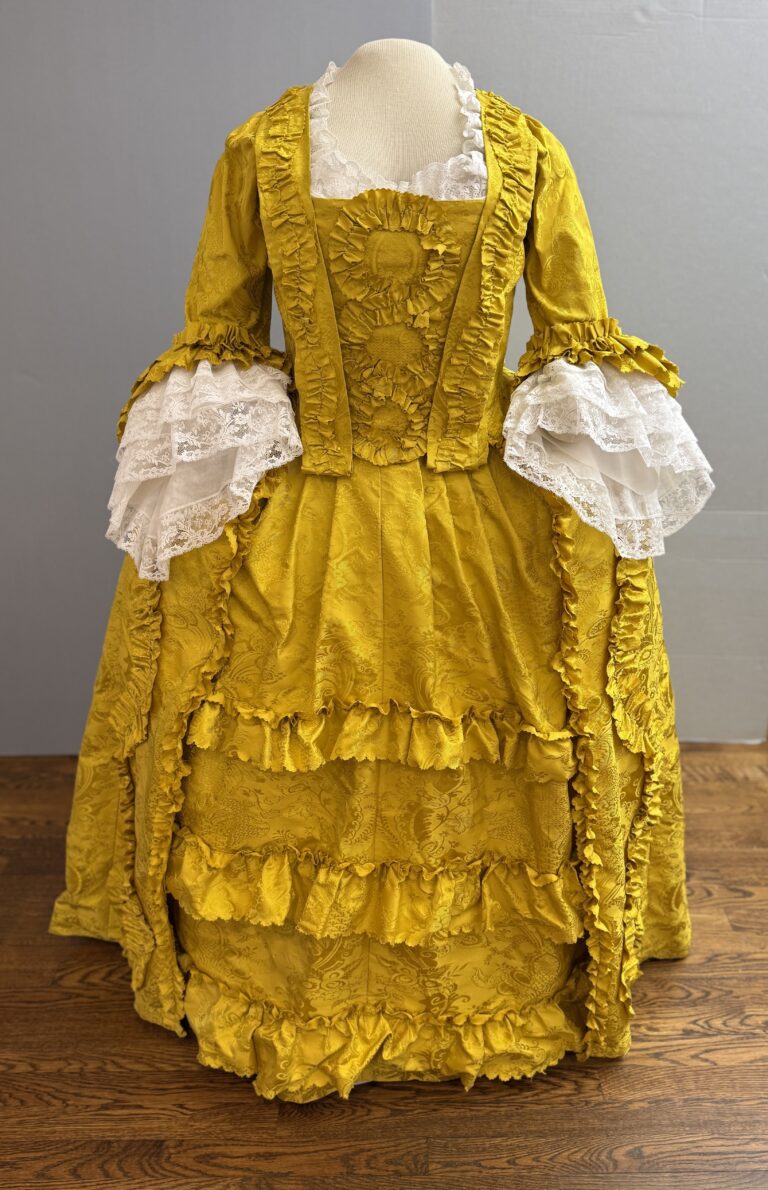
In concert with America’s 250th birthday, Caring for Textiles was deeply honored to create three custom mannequins for the re-imagining of George Washington’s Mount Vernon exhibition, “George Washington: A Revolutionary Life.” These forms, dressed with reproductions of Washington’s brown wool inauguration coat, his splendid military uniform as seen in Peale’s painting, and Martha Washington’s glorious yellow damask wedding gown, are authentic representations of the ‘real thing’ that celebrate the First Couple and bring their story to life.
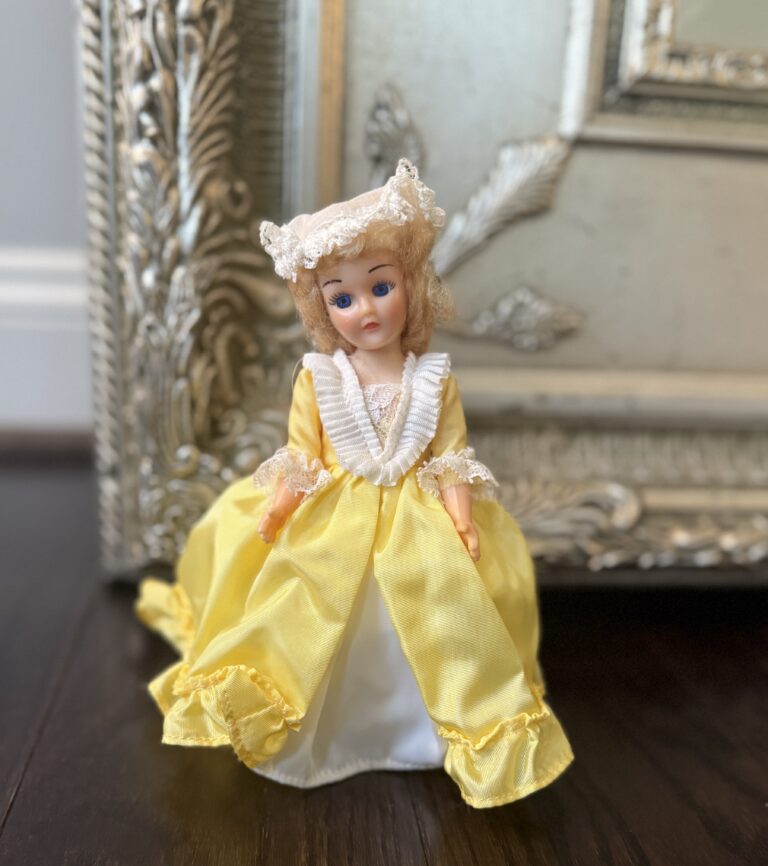
These exquisite ensembles were made by talented tailors and sewists, (Maker credits for garments in images from L-R: Neal Hurst; Mark Hutter; Brooke Welborn) who poured their hearts into accuracy of fabric, stitching, and design in order to tangibly represent a full context of George and Martha Washington’s story. It was a rare opportunity to work so intimately with reproductions of our country’s first, First Couple’s clothing, and the talented staff and curator of Mount Vernon. It was also personally special, as my family often visited Mount Vernon during my childhood, and today I still have and cherish my adorable Martha Washington doll. So, this was a particularly meaningful full-circle experience that extended to my whole family.
While these garments are not 18th century historic artifacts, as conservators we treat them as such, and with great reverence, taking the care and attention to detail to present them as ‘originals.’ One benefit (and a relief) is that since they are made of modern materials, they are more resilient and sturdier to handle. This made our process of customizing mannequins and dressing and undressing considerably less stressful or precarious.
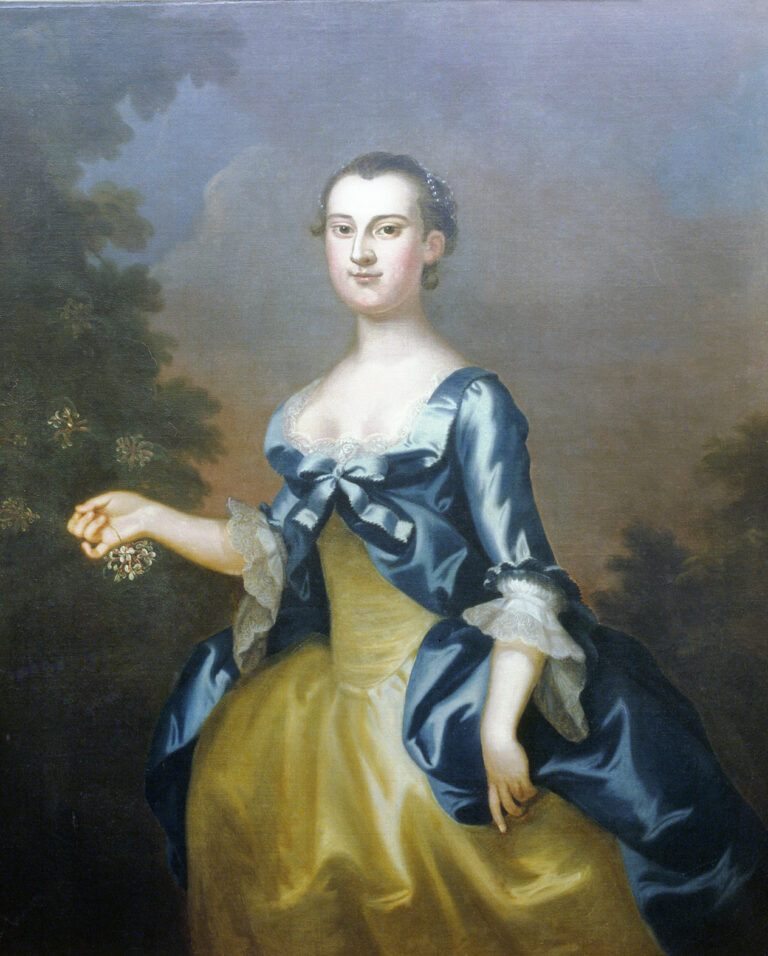
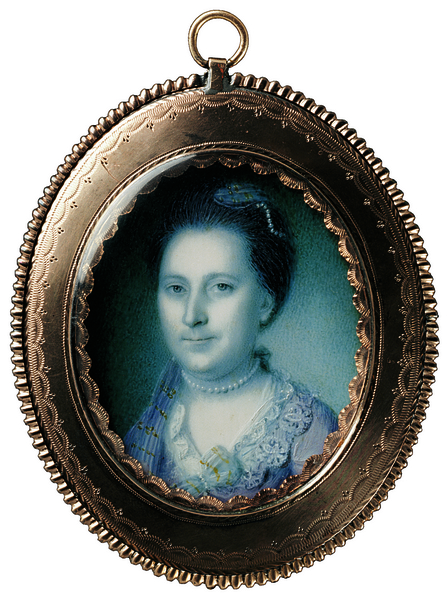
When working with reproduction clothing, we recognize that often the garments are patterned from an original historic piece. During fabrication, a ‘fit model’ is often used which can change the overall fit of the final garment. In some cases, this can render some of the historical research we do to inform body and clothing silhouette, a bit less beneficial. Moreover, contemporary bodies are very different from those of the 18th century; as are undergarments and trims – so our job is to customize and shape 21st century mannequin forms into 18th century body types – enhancing the fit, drape and silhouette, as it would have been at that time. It’s a slow process of sculpting and building up the mannequin to perfectly support the garments, and faithfully present the historic profile, style and personality. This is where historical research and primary sources come in. Accessing images of portraits and miniatures from the time of Martha’s marriage to George were referenced to determine her younger body shape and the contemporary stylistic elements of dressing – this guided how the bust was shaped and the way the form is gently padded out under the garment to present an accurate silhouette, sleeve shape and posture.
Portrait of Martha Dandridge Custis, John Wollaston, oil on canvas, 1757. Washington-Custis-Lee Collection, Washington and Lee University, Lexington, VA. [U1918.1.1]
Miniature portrait, Martha Dandridge Custis Washington, by Charles Willson Peale, watercolor on ivory, 1772
Dressing Process: The Build Up
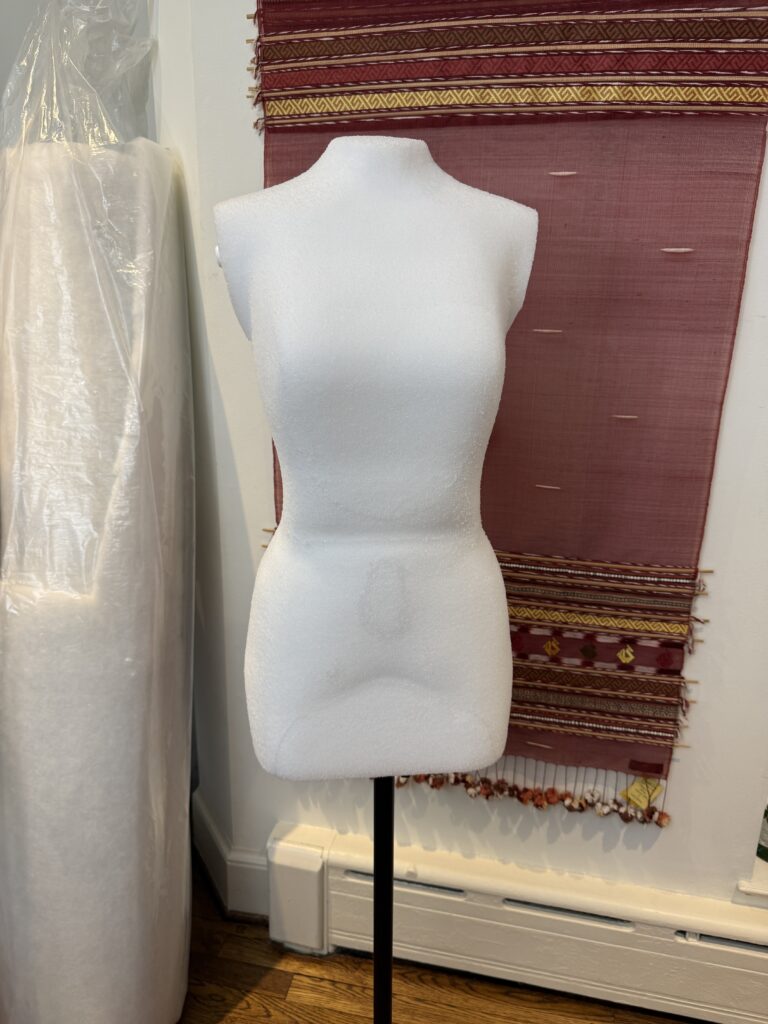
For Martha’s ensemble, the dressmaker provided the structural undergarments and dress, but to make them fit the form properly, I needed to build it up to fit the garments. When customizing a dress form, we always begin with measuring the garments and working from there to make the form fit the garment, rather than the other way around. I began with this solid Ethafoam dress form, which is easily customizable.
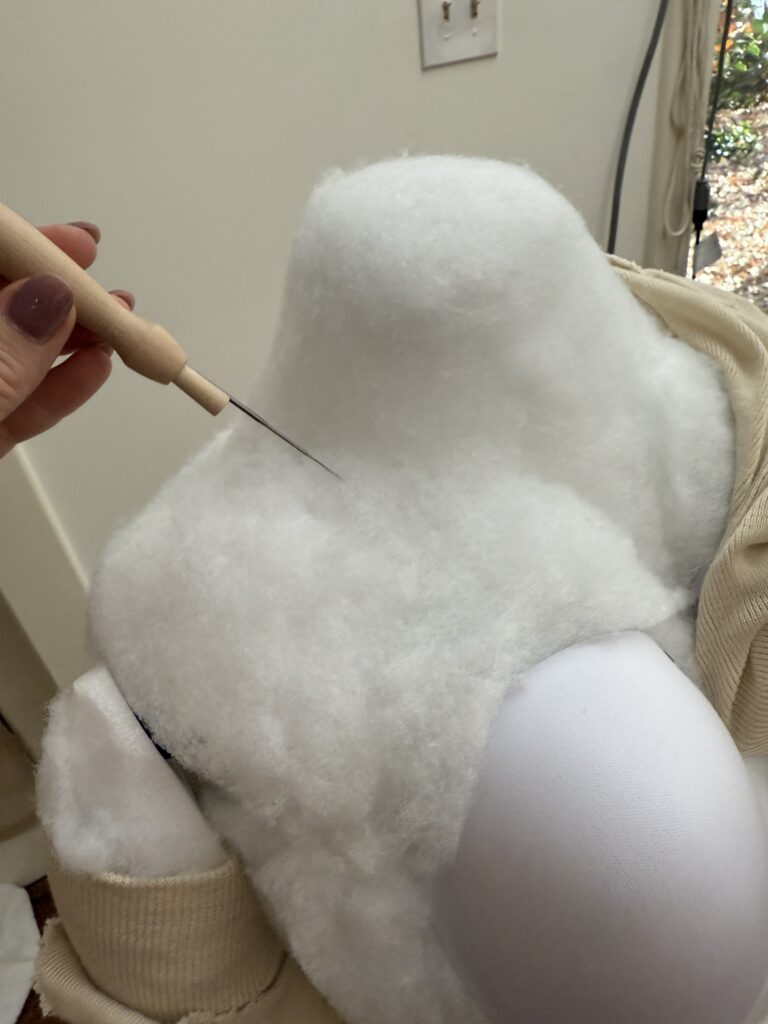
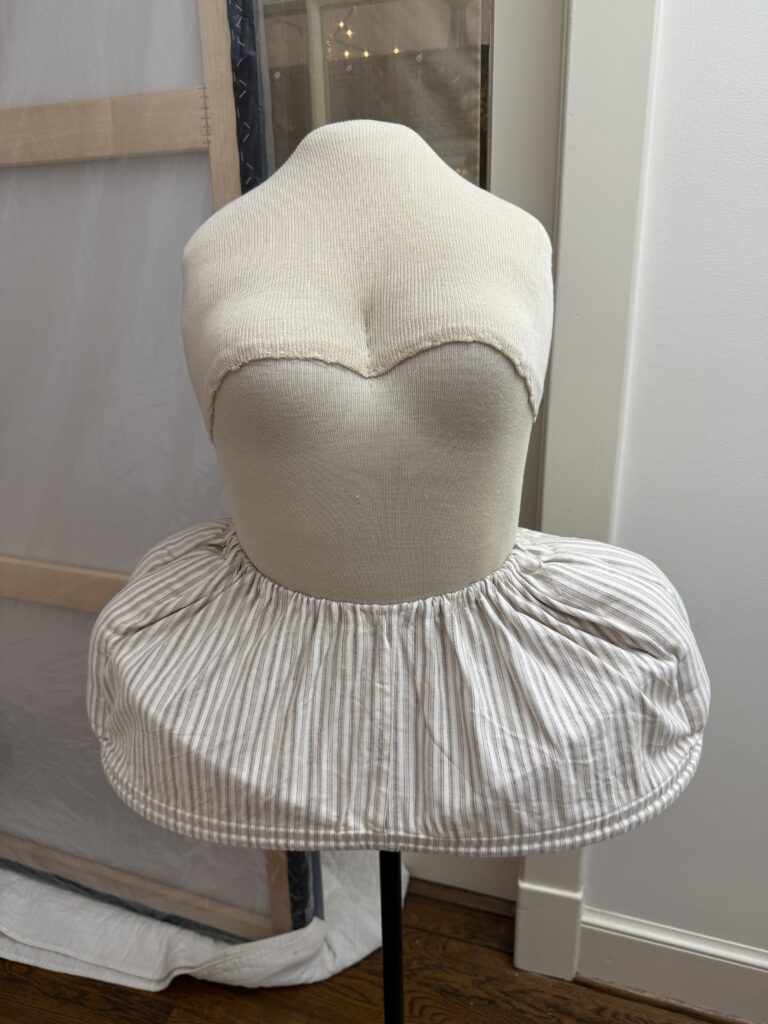
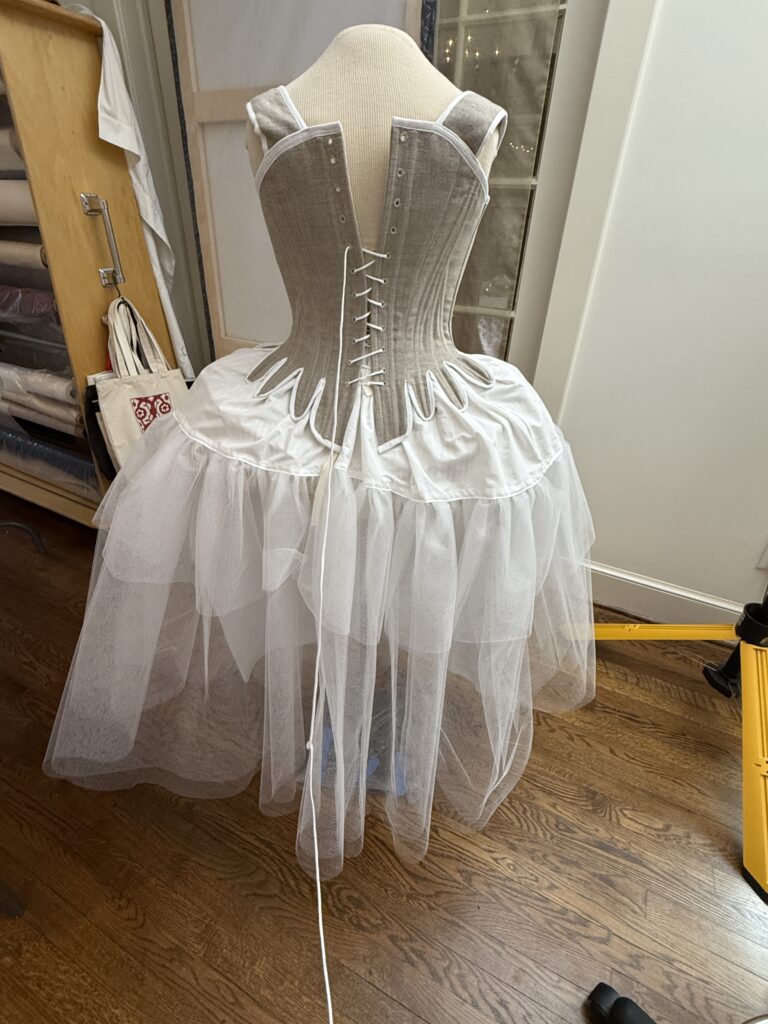
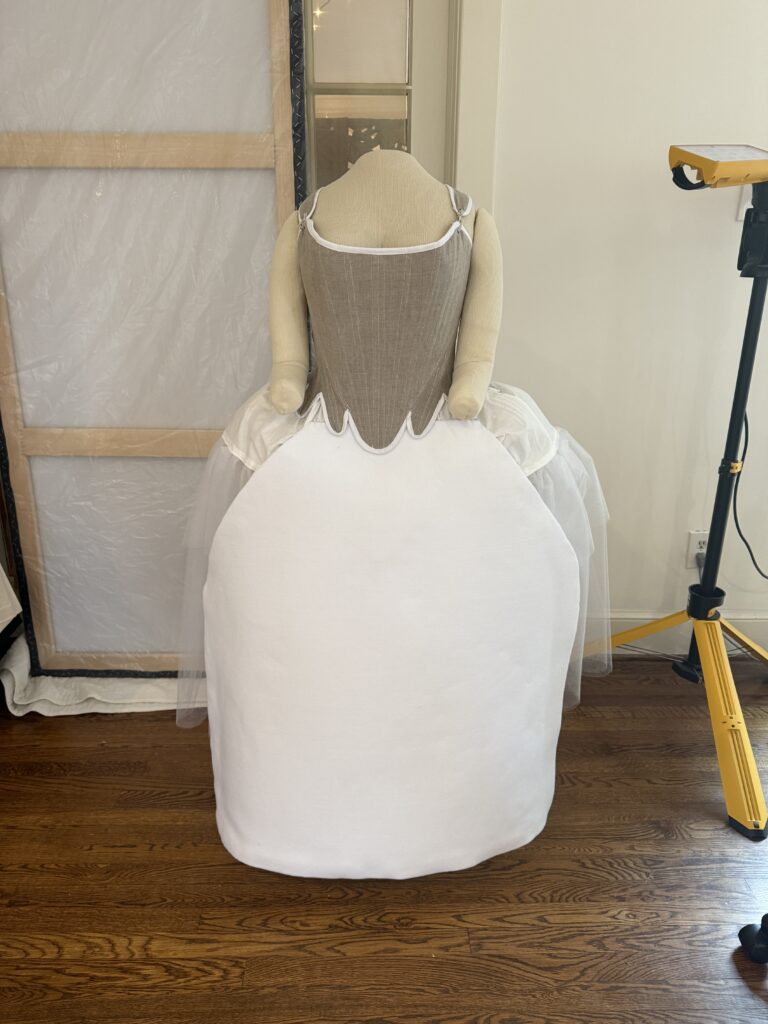
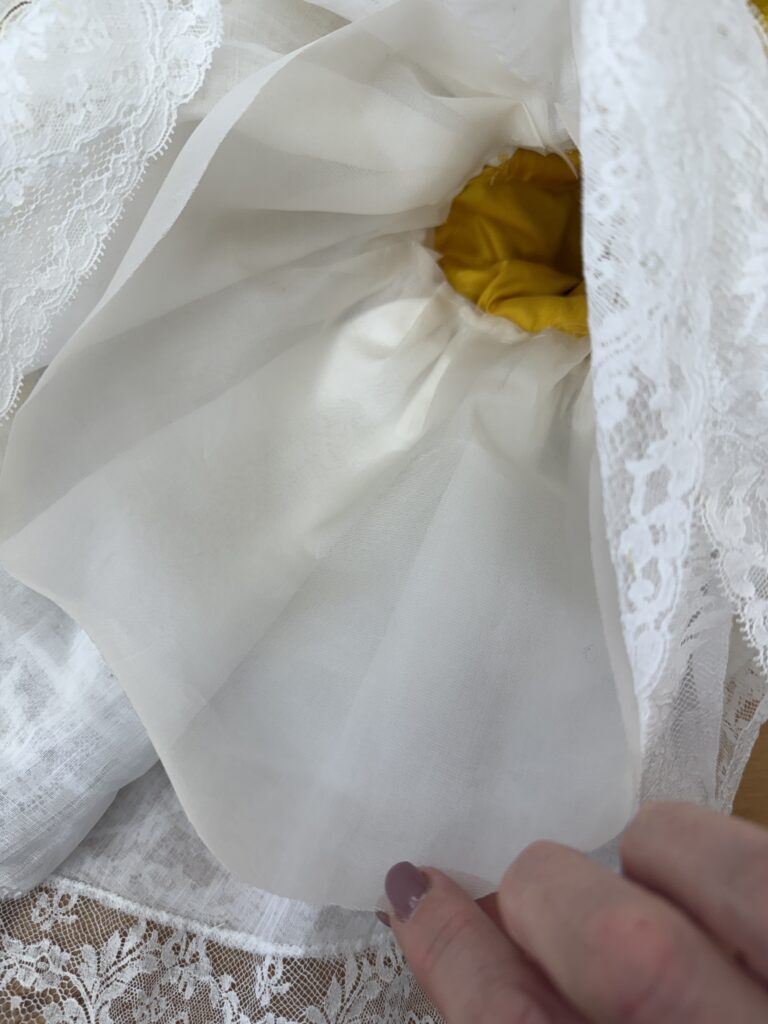
I added two layers of firm bra cups with staggered placement and high-loft quilt batting pulled apart in thin sheets and applied using a needle felting technique, to create a more period-accurate shape of the bust. High-loft batting was also added at the and shoulders and hips. The needle felting technique provides a smoother shape which is further smoothed by covering the form with stockinette jersey fabric. I then stitched the center bust area, dressed the form with the reproduction undergarments, which assisted in shaping the batting and padding under the stockinette cover, giving the appearance of a soft human body underneath. The stiff white panel at the front of the petticoat is thick polyester felt. This additional structural element assists with holding out the petticoat as it will be weighed down by the overdress. A small additional ruffle of stiff organza in the lace cuff ruffles (engageantes) gives them shape.
Fully dressed with undergarments
Adding lace engageantes supports
Finishing Touches
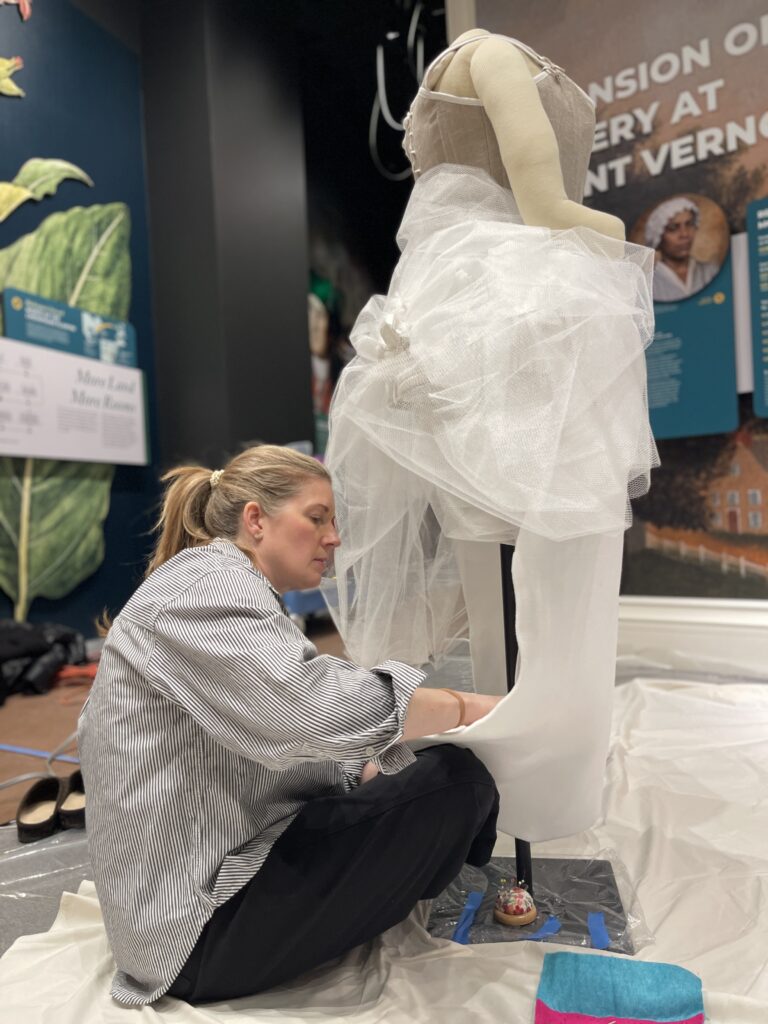
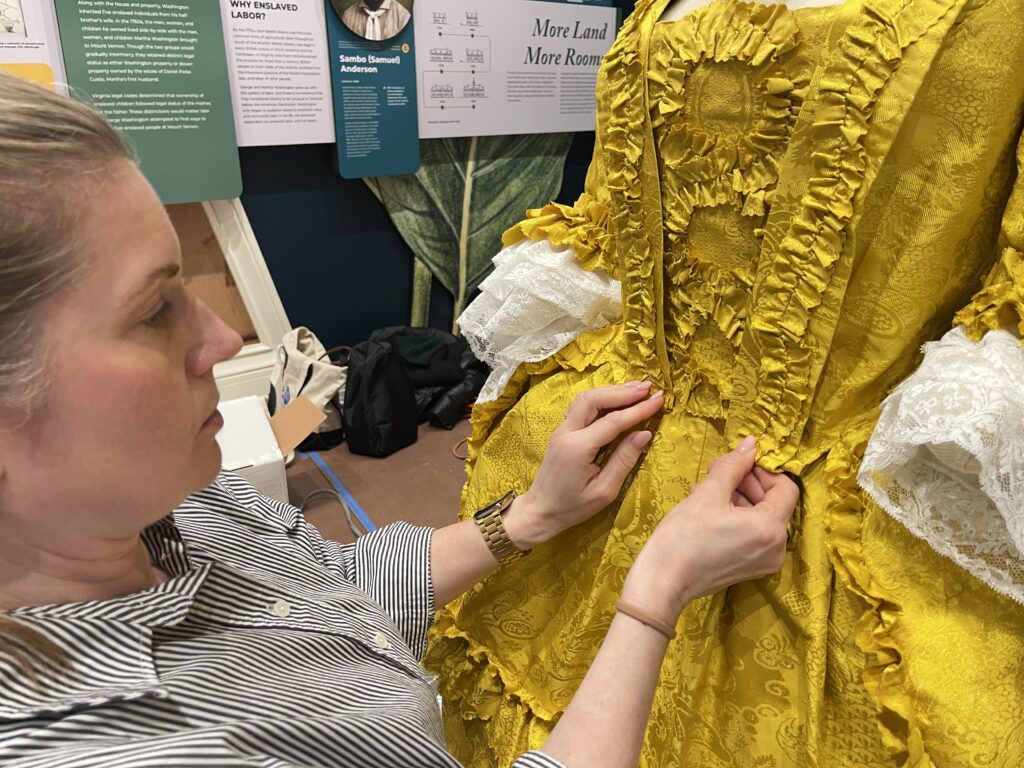
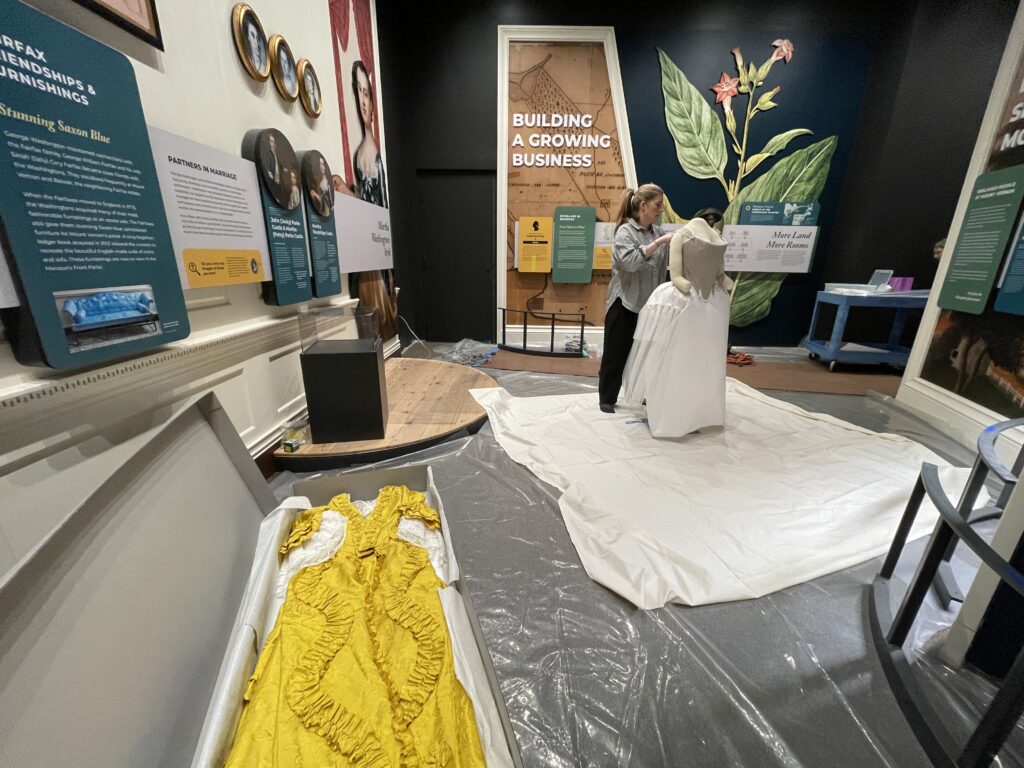
The onsite dressing process at Mount Vernon included adjusting the undergarments that may have shifted or needed final pinning. Steaming, additional padding or fluffing and setting the form’s final height for display may also be required.
Stitching the felt skirt support in place.
Arranging and securing the gown opening.
Lacing up the stays.
The completed dress was transported in a box, to be redressed on the form onsite, steamed and fluffed and then placed on a platform in the new gallery space.
Et Voilà!
Retrofitting a modern dress form to accommodate a re-creation of Martha’s wedding dress for Mount Vernon was an honor and a privilege. Using conservation and museum best practices, partnering with research, our knowledge of historic garments, body types and contemporary dressmaking, we were able to recreate the silhouette that best reflects pictorial and written accounts of her wedding “look.” By acknowledging that replica garments are often made using fit models, it required some flexibility, patience and acceptance that the final product may differ some, but still gives the goal appearance. This project was meaningful and rewarding for the experience of working with a facsimile of something so special, and reminded me of the joys of my childhood and the value of learning about our nation’s history alongside my family.
Thank You for this wonderfully detailed story behind the finished products! So many skilled hands working together! And, thank You for sharing this full circle moment! Icing on the cake to go from your childhood doll to authentic historical reproductions! A fun and touching end of the story!
We are good at doing these full circles, aren’t we? This is a wonderful photo essay for the education of Museum Studies students. Wonderful work, Julia!
Wow. What an intricate process. Kudos to Julia and the team. Wish I were close enough to visit.
Thank You for this wonderfully detailed story behind the finished products! So many skilled hands working together! And, thank You for sharing this full circle moment! Icing on the cake to go from your childhood doll to authentic historical reproductions! A fun and touching end of the story!
Congratulations. A difficult job well done!
Your work is truly amazing..!!
We are good at doing these full circles, aren’t we? This is a wonderful photo essay for the education of Museum Studies students. Wonderful work, Julia!